
EU Engagement with Taliban Draws Criticism
The European Union's decision to hold formal talks with the Taliban has ignited a wave of anger and despair among Afghan women, who see the engagement as a betrayal of their struggle for fundamental rights. The discussions, which took place in Doha, Qatar, mark the first time EU officials have met publicly with the Taliban since the group seized power in Afghanistan in August 2021.
Women's rights activists in Afghanistan and in exile have condemned the talks, arguing that the EU is legitimizing a regime that has systematically dismantled women's freedoms. Since returning to power, the Taliban has barred girls from secondary education, restricted women from most jobs, and mandated that women wear full-body coverings in public.
Outrage and Fear of Normalization
“The EU is sending a message that the Taliban's atrocities against women are acceptable,” said Zainab, a former Afghan civil servant now living in hiding. “They are trading our rights for security guarantees.” The EU delegation, led by the bloc's special envoy for Afghanistan, discussed humanitarian aid, counter-terrorism, and the need for inclusive governance. However, women's groups say the Taliban has not met any of the conditions previously set by the international community for recognition.

According to a recent UN report, the Taliban has detained and tortured women activists, and no girls have been allowed to attend secondary school for over a year. The EU has allocated €1 billion in humanitarian aid to Afghanistan since 2021, but activists argue that this funding has not been tied to improvements in women's rights.
International Divide Over Taliban Engagement
The EU's move comes amid a growing divide among Western nations on how to deal with the Taliban. While the United States has maintained a policy of non-recognition and limited engagement, some European countries have pushed for dialogue to address security concerns and prevent a humanitarian catastrophe. The Taliban has repeatedly demanded formal recognition and the lifting of sanctions.
“This is a dangerous precedent,” said Heather Barr, associate director of women's rights at Human Rights Watch. “Every time the international community meets with the Taliban without demanding concrete progress on women's rights, it undermines Afghan women and sends a signal that their lives are less important.”
Afghan Women Fear for Their Future
For Afghan women, the EU-Taliban talks represent a deepening sense of abandonment. “We feel forgotten by the world,” said Maryam, a university student who now studies in secret. “The EU meeting shows that they are ready to accept the Taliban as a normal government, even as we are erased from public life.”
The Taliban has dismissed the criticism, with spokesman Zabihullah Mujahid stating that the group is committed to women's rights within the framework of Islamic law. However, activists say the regime's actions contradict its words, pointing to the closure of beauty salons and the ban on women working in NGOs.
EU Defends Engagement as Necessary
The EU has defended the talks as a pragmatic step to address urgent issues such as terrorism and the humanitarian crisis. “We cannot ignore Afghanistan,” said EU foreign policy chief Josep Borrell. “Engagement does not mean recognition. We are raising our concerns, including on women's rights, directly with the Taliban.”
But critics argue that the EU's approach has failed to produce results. Since the Taliban takeover, women's rights have deteriorated dramatically, and the humanitarian situation remains dire, with over 28 million people in need of assistance. The EU's engagement, they say, has not translated into tangible improvements for women.
Protests and Calls for Action
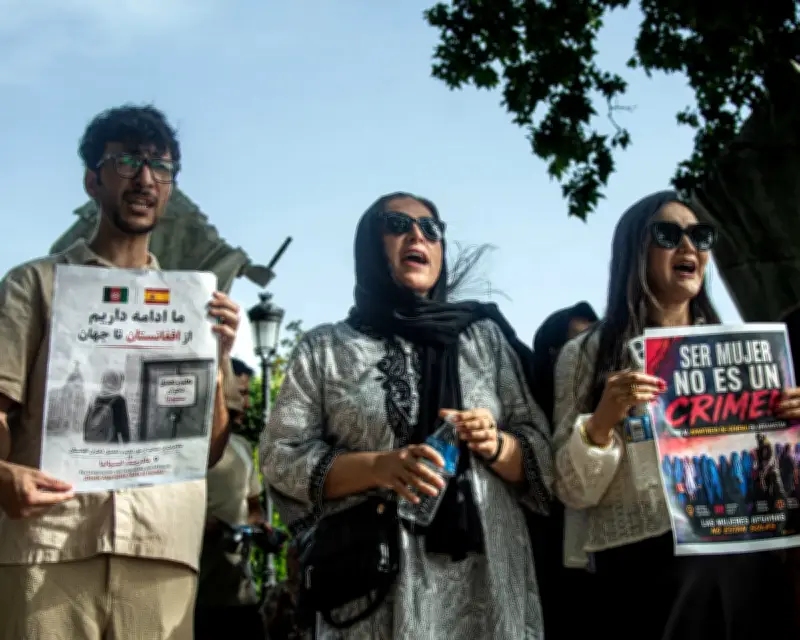
In response to the talks, Afghan women have organized protests in several cities, including Kabul and Herat, though such demonstrations are rare and dangerous under Taliban rule. Exiled activists have also launched a campaign calling on the EU to condition all aid and engagement on the restoration of women's rights.

“The EU must listen to Afghan women, not the Taliban,” said Sima Samar, former chair of the Afghanistan Independent Human Rights Commission. “If they want to help, they should support our demands for education, work, and freedom.” The EU has not yet indicated any change in its policy, but the backlash from women's rights groups is likely to intensify if further meetings are scheduled.
The controversy highlights the difficult choices facing the international community as it grapples with how to engage with the Taliban without legitimizing its oppressive rule. For Afghan women, the stakes could not be higher.