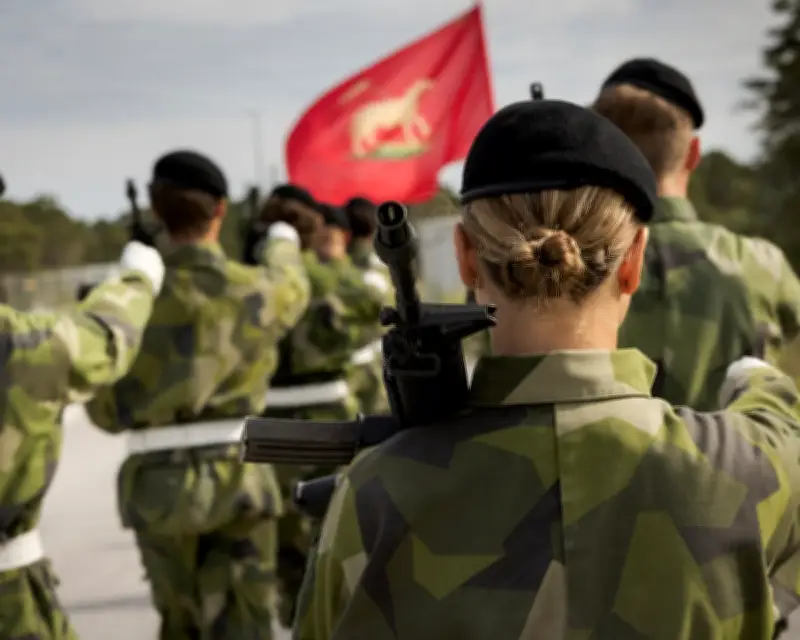
Sweden has announced a major reinforcement of its military forces on the island of Gotland, a strategic outpost in the Baltic Sea, in response to what Stockholm describes as an escalating threat from Russia. The decision, unveiled on Monday by Swedish Defence Minister Pål Jonson, includes the deployment of additional troops, advanced air defence systems, and permanent naval assets to the island.
Strategic Importance of Gotland
Gotland, located roughly 90 kilometres from the Swedish mainland, occupies a pivotal position in the Baltic Sea. Control of the island would give any adversary the ability to dominate sea lanes, disrupt shipping, and threaten the Baltic states and Poland. Sweden's move marks a dramatic shift from decades of post-Cold War downsizing, reflecting a broader Nordic recalibration of security policy following Russia's full-scale invasion of Ukraine in 2022.
“Gotland is the key to the Baltic Sea,” Jonson said during a press conference in Visby, the island's main town. “We must ensure that Sweden can defend its territory and contribute to regional stability. The security situation has fundamentally changed.”

Details of the Buildup
Under the new plan, Sweden will station a permanent mechanised infantry battalion on Gotland, augmenting the existing rapid-response force. Additionally, the Swedish Air Force will rotate fighter jets through the island's airfield, and the navy will base several surface combatants and submarines in the vicinity. Air defence systems, including the American-made Patriot batteries, will be deployed to protect against potential missile or air attacks.
The reinforcement also includes the construction of new barracks, storage facilities, and a deep-water port capable of hosting larger warships. The total cost of the initiative is estimated at 12 billion Swedish kronor (approximately $1.1 billion) over the next five years.
“This is not a symbolic gesture,” said retired Swedish Admiral Jonas Hård af Segerstad, a former chief of operations. “It is a tangible, combat-ready force that changes the military calculus in the region.”
NATO Integration and Regional Reactions
Sweden, which joined NATO in March 2024, has been rapidly integrating its defences with the alliance. The Gotland buildup is seen as a key component of NATO's eastern flank strategy. Lieutenant General Michael Claesson, Sweden's Supreme Commander, confirmed that the new forces would operate under NATO command structures during exercises and crises.
Neighbouring countries have welcomed the move. Finnish Defence Minister Antti Kaikkonen noted that “a strong Swedish presence on Gotland strengthens the entire Baltic Sea region.” However, Russia has reacted with condemnation. Kremlin spokesman Dmitry Peskov called the buildup “a provocation that undermines stability” and warned of “appropriate countermeasures.”
Analysts point out that Russia has long viewed Gotland as a potential flashpoint. In 2023, Russian military exercises simulated an amphibious assault on the island, prompting Sweden to accelerate its defensive planning.
Historical Context and Public Opinion
Gotland was demilitarised in 2005 after the end of the Cold War, a decision that was later reversed in 2015 when Russia annexed Crimea. Since then, Sweden has gradually increased its presence, but the current plan represents the largest permanent garrison on the island in modern history.
Public opinion in Sweden has shifted dramatically. A 2025 poll by the Swedish Defence Research Agency found that 68% of Swedes now support a strong military posture on Gotland, compared to just 22% in 2014. “People understand that we live in a dangerous world,” said Visby resident Karin Lindström. “We don't want war, but we must be prepared.”
The Swedish government has also allocated additional funds for civil defence on the island, including shelters and emergency supplies, recognising that Gotland could be a target for hybrid attacks such as cyber strikes or sabotage.
As the Baltic Sea becomes an increasingly contested arena, Sweden's commitment to defending Gotland sends a clear signal: the island is no longer a demilitarised relic of the past, but a frontline outpost in Europe's new security architecture.