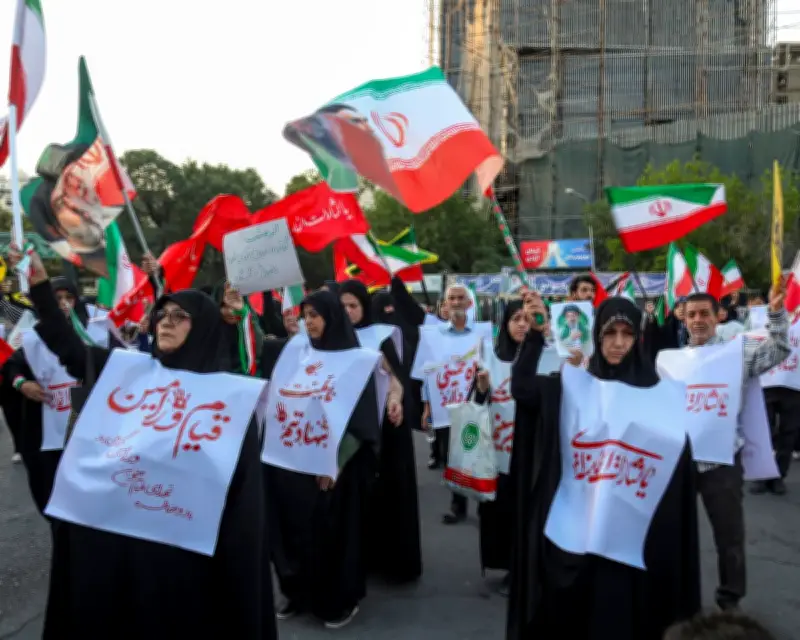
People from Tehran province gathered in support and allegiance to the new leader, Seyyed Mojtaba Khamenei, at Palestine Square in Tehran, Iran, on 12 June 2026. A preliminary peace deal could be signed within days to end the three-month war in the Middle East, according to the US, Iran, and mediators, though they provided differing timelines and versions of the text.
Pakistan's Role and Iranian Caution
Pakistan's Prime Minister, Shehbaz Sharif, announced on Saturday that Islamabad is preparing for an electronic signing within 24 hours, followed by technical-level talks next week. "We are closer to a peace deal than ever before... we are confident that this historic peace deal will form a strong foundation for lasting peace," Sharif wrote on social media. However, Esmaeil Baghaei, an Iranian foreign ministry spokesperson, urged caution. "We will have to wait and see about the exact date of the signing of the memorandum of understanding, although it will not be tomorrow," Baghaei was quoted as saying. "The possibility of this happening in the coming days cannot be ruled out."
Recent Clashes and Diplomatic Moves
Recent days have seen the most intense clashes between Iran, Israel, and the US since a ceasefire came into effect in April. Donald Trump on Thursday threatened to seize Iran's oil export terminal of Kharg Island and launch a new wave of attacks, then suddenly claimed a diplomatic breakthrough, saying a draft deal had been "approved" by "the highest level of Iranian leadership." During the conflict, the US president has claimed about 40 times that a deal was on the point of completion, only to then revert to threatening Iran with new attacks.

Conflicting Claims of Victory
Officials from both the US and Iran are trying to frame the possible deal as a victory, claiming it includes a series of major concessions by their enemies. Iranian Foreign Minister Abbas Araghchi said on state television on Friday that the draft agreement showed his country had emerged stronger from the conflict. "Iran is the winner of the war with the US," he told viewers. Hours after those remarks, US forces shot down several Iranian one-way attack drones heading toward the Strait of Hormuz, the critical waterway that carried about a fifth of the world's oil and liquid gas supplies before the conflict but was closed to most shipping by Iran within days of the outbreak of hostilities.
Proposed Deal Details
The proposed deal calls for reopening the strait and lifting the US naval blockade on Iranian ports, sources on either side of the talks said. Negotiations over Iran's nuclear program would take place afterwards. On Friday, Trump said a report of the text of the draft deal published by Iran's semi-official Mehr news agency, which quoted a source close to Iran's negotiating team, bore "no relation to the truth." According to Mehr and Iranian officials, the agreement would end conflict on all fronts, including Lebanon, where Israel has launched an offensive against Hezbollah, and ensure the release of $24bn (£18bn) of Iran's frozen assets. It would also set a 60-day period for negotiations on Tehran's nuclear programme, offer the suspension of sanctions on the sale of Iran's oil and petrochemical products, allow Iran to levy service charges on passage through the Strait of Hormuz, and lift the US naval blockade on Iranian ports, which has been in place since 13 April.
Contrasting US Statements
The claims contrasted dramatically with statements from Washington, where officials said the agreement stipulated that Iran's nuclear material would be destroyed, its nuclear programme dismantled, none of its frozen money would be released until it met certain demands, and Iran would stop supporting allied militant movements around the Middle East. A US official, speaking on condition of anonymity, told reporters on Friday that the deal met Trump's core objectives and put negotiations "in a very, very good place."
Israeli Reaction
The apparent deal has prompted consternation in Israel, where Prime Minister Benjamin Netanyahu has clashed with Trump over US demands that Israel curb military action in Lebanon to allow Washington to reach a deal with Tehran. Israeli forces carried out airstrikes in southern Lebanon on Saturday and issued evacuation warnings for the city of Nabatieh and more than 20 other locations ahead of raids.