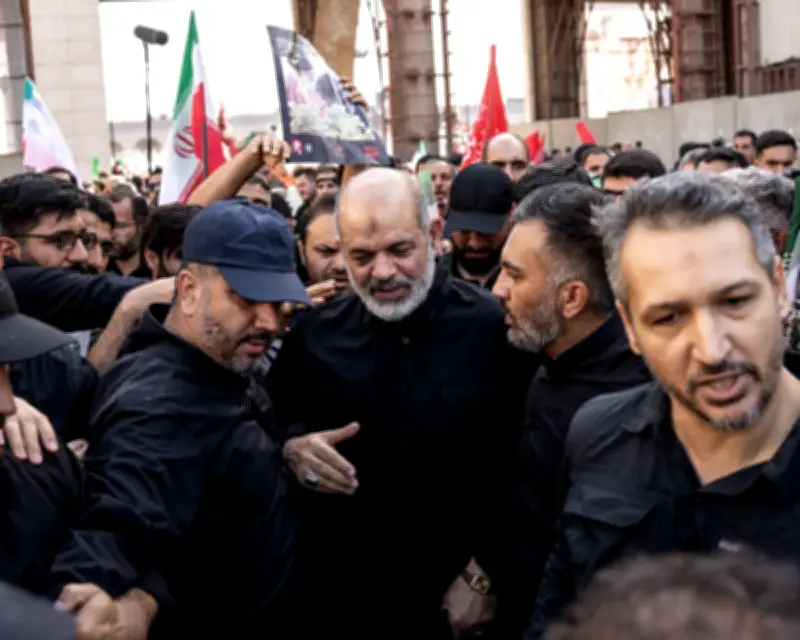
Iran has seized control of the strategic Strait of Hormuz, a vital chokepoint for global oil shipments, in the wake of the funeral of Supreme Leader Ali Khamenei. The move has sent shockwaves through international markets and raised fears of a major conflict in the Middle East.
Details of the Takeover
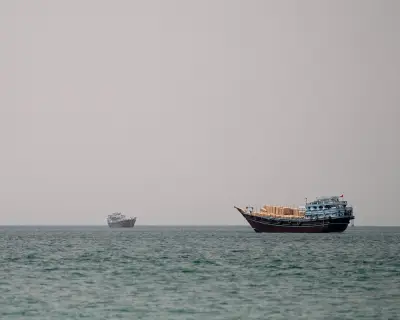
According to reports from the region, Iranian naval forces moved swiftly to block the strait on Monday, hours after Khamenei's funeral concluded in Tehran. The strait, through which about 20% of the world's oil passes, is now effectively under Iranian control, with all commercial shipping halted.
The action appears to have been orchestrated by Iran's hardline factions, who used the funeral as a cover to mobilize military assets. A senior Iranian commander, speaking on condition of anonymity, said, "The strait is now a red line for Iran. We will not allow any ship to pass without our permission."

Global Reaction
The United States has condemned the seizure, with President Joe Biden calling it "an act of war" and vowing to respond. The Pentagon has placed naval forces in the region on high alert. Meanwhile, oil prices surged by 15% in early trading, hitting a record high of $120 per barrel.
European leaders have urged restraint, with the UK Foreign Secretary stating, "This is a dangerous escalation. We call on Iran to immediately withdraw and allow free passage."
Impact on Oil Markets
Analysts warn that the blockade could trigger a global recession if it persists. The Strait of Hormuz handles roughly 17 million barrels of oil per day, and its closure would severely impact supplies from Saudi Arabia, Iraq, and other Gulf states. "This is the worst-case scenario for energy markets," said John Smith, an energy analyst at Global Insights. "We haven't seen a disruption of this magnitude since the 1970s oil crisis."
Iran's oil exports, already under sanctions, are expected to suffer as well, but the regime appears willing to risk economic pain for geopolitical leverage.
Funeral as a Catalyst
Khamenei's funeral drew millions of mourners, and the chaos provided cover for the military operation. The Supreme Leader's death has left a power vacuum, with hardliners vying for control. The seizure of the strait is seen as a power play by the Islamic Revolutionary Guard Corps (IRGC) to assert dominance over the new leadership.
Iran's interim president, Mohammad Mokhber, has supported the action, stating in a televised address, "The Persian Gulf belongs to Iran. We will defend our sovereignty at any cost."
International Legal and Diplomatic Fallout
The United Nations Security Council is set to hold an emergency session, with the US and its allies pushing for sanctions. Russia and China have called for dialogue, but have not condemned Iran's actions. The International Maritime Organization has declared the strait a restricted zone, warning ships to stay away.
Diplomatic efforts are underway, with Oman offering to mediate. However, Iran's hardline stance suggests a quick resolution is unlikely.