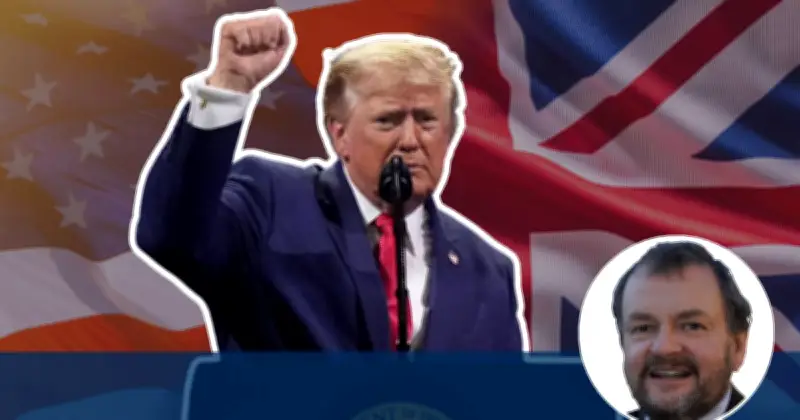
Historians and political commentators are drawing striking parallels between Donald Trump's recent assertion of executive authority and the autocratic tendencies of King George III, whose reign sparked the American Revolution. The comparison comes as Trump signed a series of executive orders expanding presidential power, prompting concerns over the erosion of democratic checks and balances.
Executive Orders Spark Constitutional Debate
In the past week, Trump issued directives that bypass congressional approval on issues ranging from immigration to environmental regulations. Critics argue these moves mirror the British monarch's unilateral actions that led to the colonists' declaration of independence. According to constitutional scholar Dr. Emily Roberts of Georgetown University, "The accumulation of power in the executive branch without legislative oversight is reminiscent of the grievances listed in the Declaration of Independence against King George III."
Historical Context and Warnings
King George III's reign (1760-1820) was marked by attempts to centralize authority, including the imposition of taxes without representation and the suspension of colonial legislatures. Similarly, Trump's recent use of executive orders to redirect funds for a border wall and to impose tariffs has been criticized as an overreach. A 2023 poll by the Pew Research Center found that 58% of Americans believe the president has too much power, a sentiment not seen since the Watergate era.

Impact on Democratic Institutions
The comparison is not merely academic. Legal experts warn that such actions undermine the separation of powers. "When a president acts unilaterally, it sets a precedent for future administrations to ignore Congress," said Professor James Miller, a historian at Yale. "This is how democracies erode—not overnight, but through a series of power grabs that go unchecked." The American Civil Liberties Union has already filed lawsuits challenging several of the orders, citing violations of the Constitution.
Political Reactions
Democrats have seized on the historical analogy. House Speaker Nancy Pelosi stated, "President Trump is behaving like a monarch, not a democratically elected leader. Our founders fought a revolution to escape such tyranny." Meanwhile, Trump supporters dismiss the comparison, arguing that executive orders are a legitimate tool used by all presidents. White House Press Secretary Sarah Huckabee Sanders defended the actions, saying, "The president is fulfilling his campaign promises and using the authority granted to him by the Constitution."
Global Implications
The debate extends beyond U.S. borders. International allies have expressed concern over the stability of American democracy. A spokesperson for the European Union noted, "We are watching these developments closely. A strong, democratic United States is vital for global security." The United Nations has also issued a statement urging respect for democratic norms.
Looking Ahead
As legal battles loom, the comparison to King George III serves as a stark reminder of the fragility of democratic institutions. With the 2024 election approaching, the question of executive power is likely to remain a central issue. For now, historians and citizens alike are left to ponder whether history is repeating itself.